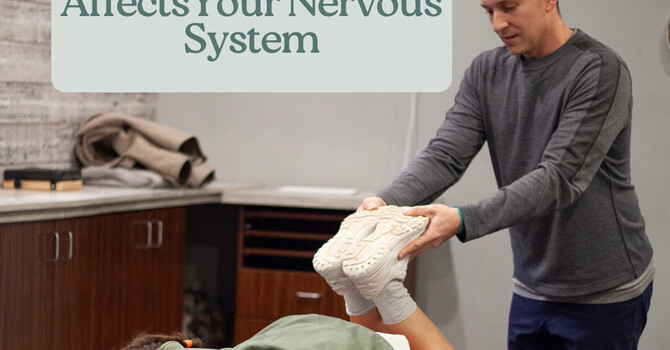
Restless leg syndrome is ruining your sleep - and it's not "just in your head." It's a nervous system communication issue.
That overwhelming urge to move your legs. The creeping, crawling, tingling sensations. Worse at night when you're trying to rest. Only relieved temporarily by movement and then it starts again. Over and over and all night.
You dread bedtime. Your partner is exhausted from your constant movement. You've tried magnesium, stretching, and warm baths, yet nothing gives lasting relief.
Here's what's happening:
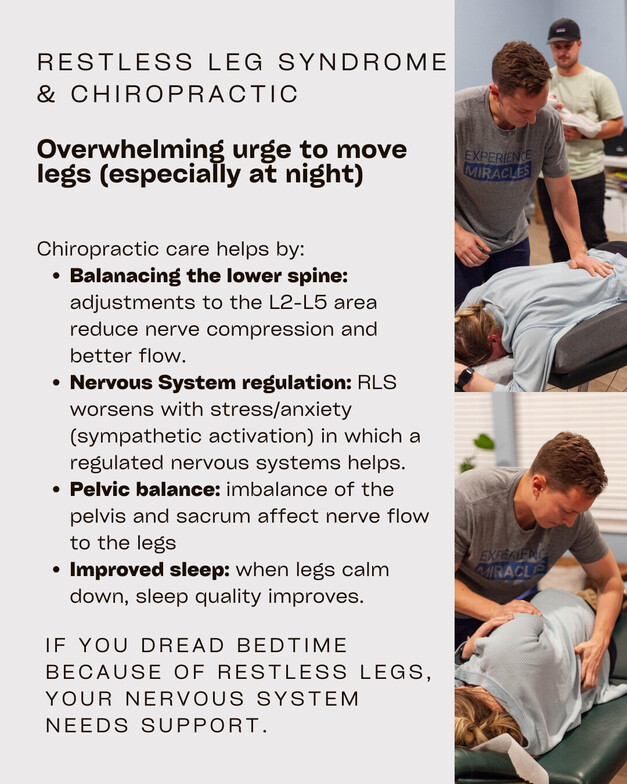
Restless leg syndrome is miscommunication between your brain and legs. Nerves from your lower spine (L2-L5) control leg sensation and movement. When these nerves are compressed or irritated from spinal imbalance, sensory signals get scrambled. Your brain receives constant "move your legs" signals even though there's no reason to move.
Common causes of nerve compression:
Sitting all day (lumbar spine imbalance)
Pregnancy (pelvic shifts + hormones)
Chronic stress (NS dysregulation worsens RLS)
Old lower back injuries creating compensation
Poor posture affecting nerve flow
How chiropractic helps:
Lower spine adjustments (L2-L5) reduce nerve compression and restore clear brain-leg communication.
Sacral alignment improves nerve flow to legs.
Nervous system regulation reduces stress-related RLS flare-ups (it's worse when you're anxious/stressed).
What patients tell us in our office after receiving care;
"I hadn't slept through the night in 2 years. My legs wouldn't stop. After consistent chiropractic care, they finally calm down at night."
"My RLS was so bad during pregnancy I wanted to cry. Adjustments were the only thing that helped."
Plus we'll tell you: Supplement magnesium glycinate (400-600mg before bed), stay hydrated, avoid caffeine after 2pm, and gentle evening stretching. But these only work optimally when nerve communication is clear.
If you dread bedtime because of restless legs, your nervous system needs support. Your legs aren't the problem, the brain-body connection is and we can help.
Taylor MacLean
Contact Me